
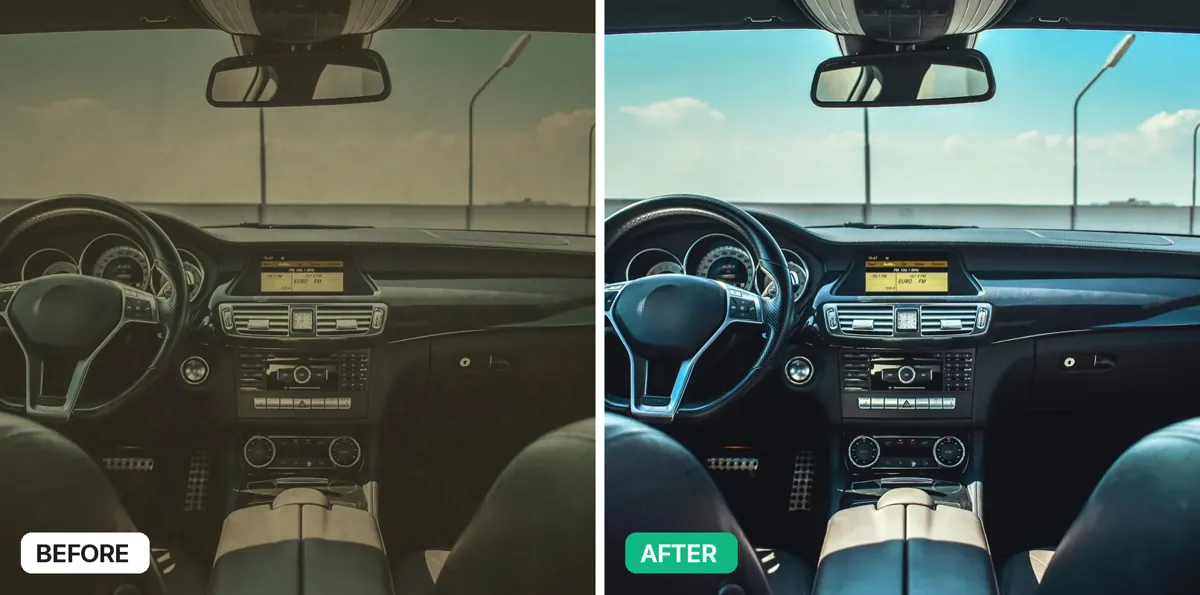
Before & after photos do two jobs for a cleaning or detailing business. They prove the work when someone questions it, and they sell your next job when you share them. A few habits make the difference between a camera roll full of blurry snaps and photos that actually do both.
1. Shoot the “before” first — always
It sounds obvious, but the before photo is the one people forget when they're keen to start. Make it the first thing you do in every room, before you move anything. Without it, the after photo proves very little.
2. Same spot, same angle, same framing
A before and after only works if they're clearly the same place. Stand in the same position, hold the phone at the same height, and include a fixed reference — a window, a tap, a cupboard corner — in both shots. Wide shots from the doorway give context; close-ups show the detail.
3. Light it the same way
Switch on the same lights for both photos and avoid shooting straight into a bright window. A brighter “after” is great — as long as it's because the surface is clean, not because you turned on more lights. Clients notice.
4. Capture the details people argue about
- Inside the oven and the door glass
- Extractor filters and hob burners
- Limescale on taps and shower screens
- Skirting boards, window tracks and grout
- For cars: footwells, seat rails, door pockets and the boot
5. Make the time and place obvious
A photo's file data can be lost when it's forwarded or compressed by a messaging app. A visible stamp with the date, time and address on the image itself travels with the photo wherever it goes, and makes it easy for anyone to see when and where it was taken.
6. Don't edit beyond cropping
Filters, heavy brightening or retouching undermine the whole point. If a photo is ever used to settle a dispute, you want it to be exactly what the camera saw.
7. Send them as one tidy report
Twenty separate images in a chat are hard to follow. Group them by room, before next to after, with your business name on top. It looks professional, it's easy to forward to a landlord or agent, and it gets shared — which is free marketing.
8. Ask before using them in marketing
Photos of someone's home or car belong in their report. If you want to use them on social media or your website, ask first and leave out house numbers, number plates and personal items.